Tasmanian Tiger - Thylacine
by PH4N20M
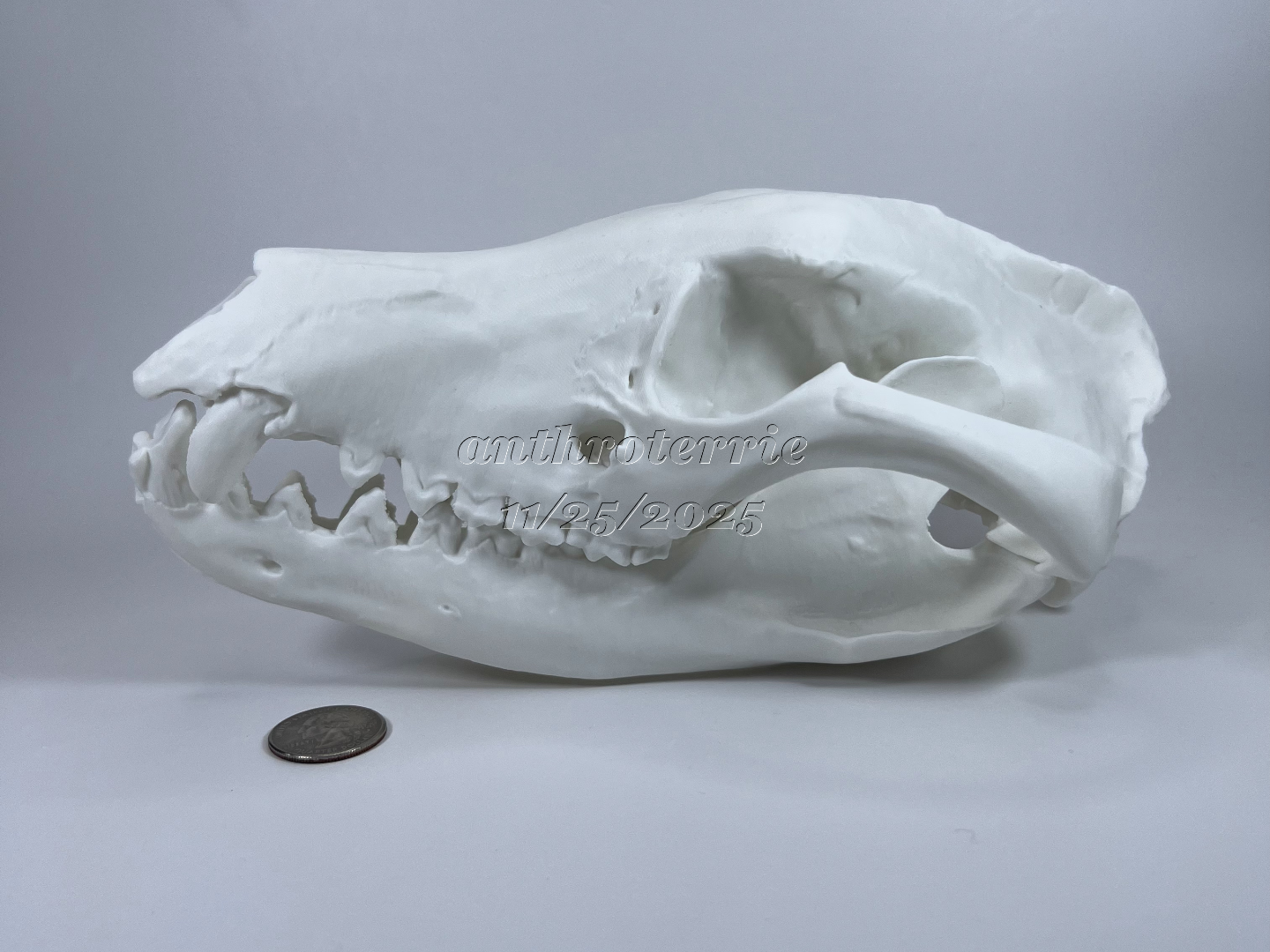
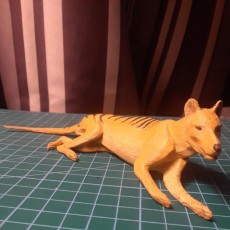
da Vinci Exotic Species challenge Design: My object was done with photogrammetry using Agisoft. I have included photos showing some of the progress. You will see that on my test print that the ears were cut off because they were to thin. I used Sculptris to thicken the ears so that they would print correctly. After 1 failed print the final print turned out perfect. Printing: I use an old ROBO R1+ printer. I used orange smartbuy PLA filament. I didn't use the heated bed, just painters tape. I found I needed to lower the print into the bed by 1.75mm so that it would sit up straight. You will see in the test print it wouldn't sit up. The nozzle is a 0.6mm with a 0.4mm resolution. I use this setup most of the time in order to cut down print time by more than half of the stock setup of 0.4mm nozzle. Painting: I used Grumbacher acrylic paint and various canvas brushes my wife had. I painted the whole body with yellow ochre then used a mix of that and white to undertone the belly and inside the legs. I used burnt umber to do the stripes and the eyes, nose, and mouth. I used a brim with support. thylacine wiki: The thylacine (/ˈθaɪləsiːn/ THY-lə-seen,[11] or /ˈθaɪləsaɪn/ THY-lə-syne,[12] also /ˈθaɪləsɪn/;[13] Thylacinus cynocephalus) was the largest known carnivorous marsupial of modern times. It is commonly known as the Tasmanian tiger (because of its striped lower back) or the Tasmanian wolf.[14] Native to continental Australia, Tasmania, and New Guinea, it is believed to have become extinct in the 20th century. It was the last extant member of its family, Thylacinidae; specimens of other members of the family have been found in the fossil record dating back to the late Oligocene. Surviving evidence suggests that it was a relatively shy, nocturnal creature with the general appearance of a medium-to-large-size dog, except for its stiff tail and abdominal pouch (reminiscent of a kangaroo) and dark transverse stripes that radiated from the top of its back, similar to those o